

When brothers Orville and Wilbur Wright captured the attention of our 8-year-old son, Sean, my husband and I decided to plan our first family trip to the Outer Banks. Although the beaches, Jockey's Ridge and other Outer Banks sites would be included in the itinerary, the Wright Brothers National Memorial, a National Park in Kill Devil Hills, would be a prominent part of our visit.
We arrived in time for a ranger-led tour of the park – Tours are typically at 11 a.m., 1 and 3 p.m. each day. The ranger shared stories about the brothers’ trials and tribulations while they tried to get a plane in the air. He showed us the First Flight Airstrip where the Wright brothers’ first four flights were recorded.
The rest of the family became fans of the Wright brothers after learning more about their origin story from the ranger.
When my husband and I returned to the Outer Banks this spring, one of our stops was the Wright Brothers National Memorial. Again, we joined a tour and discovered even more about the Wright brothers, and how their parents and sister, Katharine, influenced their interest in flying.
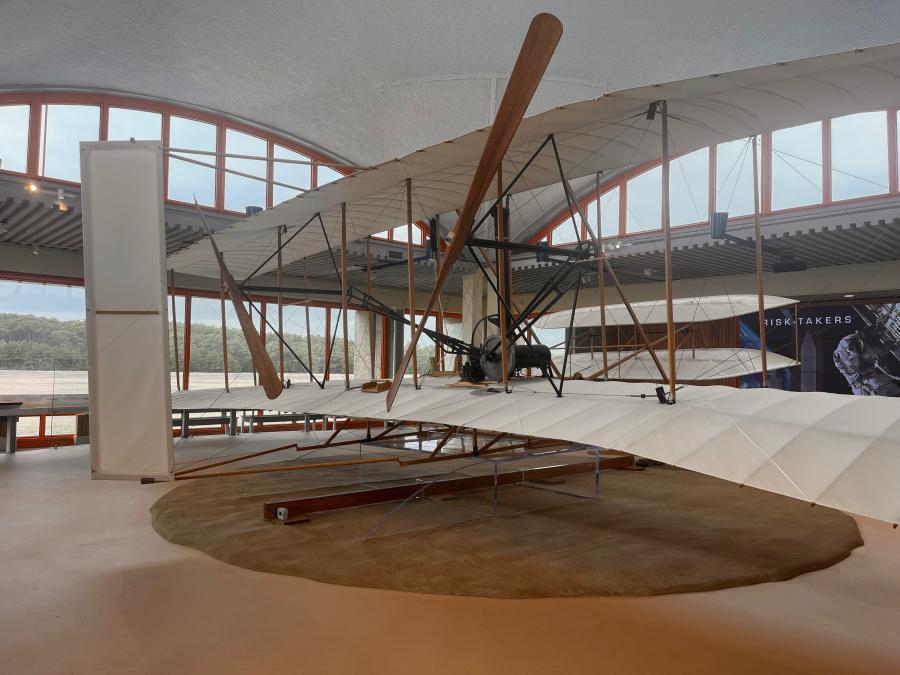
It left me wondering how much more park rangers know about the Wright brothers and the park itself: If I had the opportunity to talk with them, what would I ask? What would I want to know?
Luckily, park rangers Mike Anderson and Paula Eastman agreed to talk with me about their experiences at Wright Brothers National Memorial.
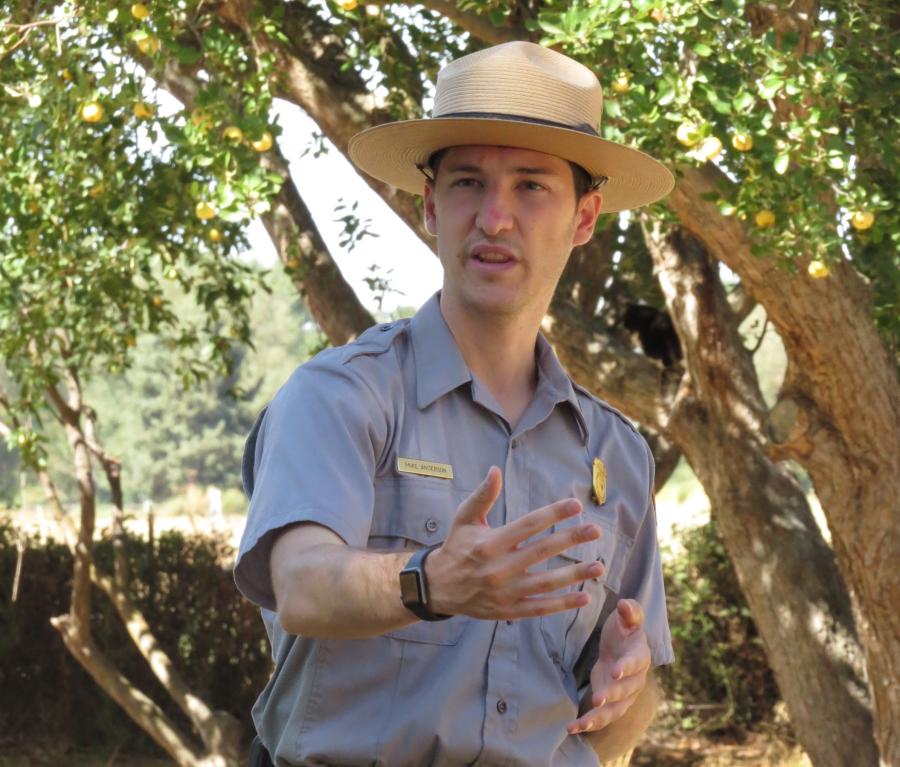
Mike Anderson joined the National Park Service nine years ago. He’s been at the Wright Brothers National Memorial for just five months.
Vanessa Infanzon: What's your favorite piece of history about the Wright Brothers?
Mike Anderson: It took only 66 years from the first Wright Brothers flight to people landing on the moon. A piece of the original 1903 Flyer went to the moon with the Apollo 11 astronauts and is on display at the park.
VI: What's least known about the Wright Brothers?
MA: Many people are very surprised to find that both Orville and Wilbur never married or had any children.
VI: When you give a tour, what tidbit of information do you share with visitors?
MA: After their time here in 1901 was a big disappointment, they almost gave up trying to fly and claimed no one would fly in their lifetime. But they persevered!
VI: Why stay for the ranger tour?
MA: Museum exhibits can be great, but every ranger program will have its own personal touch on the story you don't get with straight information.
VI: What should visitors look for when they are walking on the park grounds?
MA: Plan on walking the flight line to be able to see and feel how long their first four flights went.
VI: What should guests know before they arrive?
MA: Visitors should make sure to know the park opens at 9 a.m. and closes at 5 p.m. Nothing is worse than getting to a park too late to fully embrace all it has to offer. Visitors often spend one and a half to two hours at the park, so make sure you have enough time.
VI: Anything else we should know?
MA: Make sure you plan for hot weather. The park is a former sand dune so there are not many trees or shade options in the park. It can be very hot. Bring water and sunscreen.
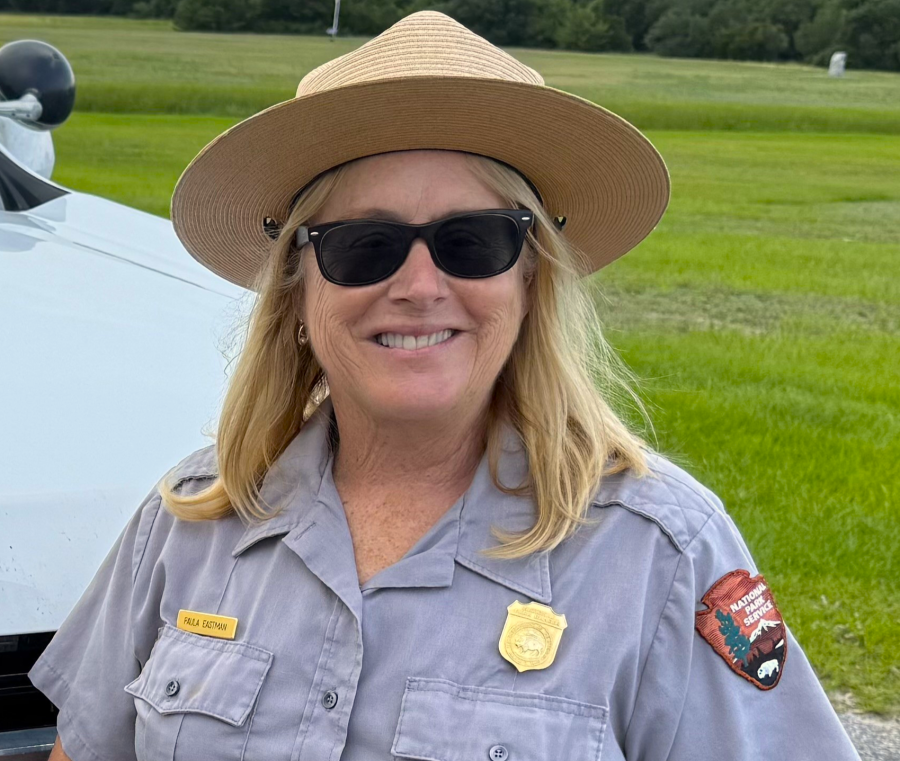
Paula Eastman has been a National Park Service Ranger for five years and has volunteered in a wide variety of positions such as resource management, search and rescue, and administration. She too has been at the Wright Brothers National Memorial for five months.
Vanessa Infanzon: What's your favorite piece of history about the Wright Brothers?
Paula Eastman: As children, a simple rubber-band-powered helicopter captivated their interest in flight. This toy called the BAT would ignite a lifelong passion and pursuit of flight.
VI: What's least known about the Wright Brothers?
PE: Pieces of the Wright Flyer have been well beyond earth. Wood and fabric have been to the moon with Neil Armstrong aboard Apollo 11. A piece of material from the wings of the Wright brothers’ Flyer were aboard Ingenuity, the Mars helicopter, inside NASA’s Perseverance rover, arriving on Mars on February 18, 2021.
VI: What makes the ranger tour worth it?
PE: Each ranger has a unique style of reaching the audience. The programs are audience-centered and enhanced by the participation of the visitors. This is their story, the human persistence: passion, discouragement, failure, success, and what is possible when others encourage and support each other when they are about to quit.
VI: What should visitors look for when they are walking the park grounds?
PE: The sand dunes have been stabilized to help preserve the location of Wright Brothers' first flight. Look for changes in the landscape.
VI: What's the best reaction you've received from a visitor?
PE: Cry. It’s just incredible how moved people are sometimes when they feel the human side of an event that changed the world.
VI: Have you ever met a relative of the Wright brothers who came to see the Memorial? If yes, what was that experience like?
PE: Yes, twice. I love to see their excitement. I can hear how passionate they are about being here at the Wright Brothers National Monument. They are proud to be part of something that seemed unsurmountable.
VI: What should guests know before they arrive?
PE: Plan like a ranger! Bring plenty of water, sunscreen, and snacks. Also, Wright Brothers National Monument is a welcoming and interesting place for all, including dogs. The National Park Service has a fun and educational BARK Ranger Program. Here are the BARK ranger principals:
-
Bag your pet’s waste
-
Always leash your pet
-
Respect wildlife
-
Know where you can go
VI: Anything else we should know?
PE: Oh, so much more…. An epic movie could and should be made about the story of the Wright Brothers.